
Dirty makeup brushes are one of the most overlooked causes of poor makeup hygiene and skin irritation. Many beauty users focus heavily on skincare products while forgetting that their makeup tools touch the skin every single day.
Over time, dirty makeup brushes collect bacteria, oil, dead skin cells, and leftover makeup residue. This buildup may contribute to clogged pores, acne breakouts, redness, and uneven makeup application.
Understanding the risks of dirty makeup brushes can help improve both skincare health and beauty results. In this guide, we’ll explain how dirty brushes affect the skin, how often they should be cleaned, and the best ways to maintain proper brush hygiene.
How Dirty Makeup Brushes Collect Bacteria
Makeup brushes naturally collect product buildup after every use. Foundation, concealer, powder, oils, and dead skin cells remain trapped inside the brush bristles. When brushes are not cleaned regularly, bacteria can grow quickly in the accumulated residue.
Brushes stored in bathrooms or humid environments may collect even more bacteria because moisture creates ideal conditions for microbial growth. Makeup sponges are especially vulnerable because they absorb liquids and remain damp for longer periods of time.
Using dirty makeup brushes repeatedly transfers bacteria and dirt back onto the skin, which may negatively affect overall skin health and makeup hygiene.
Skin Problems Caused by Dirty Makeup Brushes
One of the most common problems associated with dirty makeup brushes is acne. Bacteria trapped inside brushes may clog pores and increase skin irritation, especially for individuals with sensitive or acne-prone skin.
Dirty brushes may also contribute to redness, allergic reactions, and uneven skin texture. Old product buildup prevents makeup from blending properly, often leading to patchy or streaky application.
In some cases, sharing dirty makeup brushes with others may increase the risk of infections or eye irritation. Proper brush cleaning is an important part of maintaining both beauty hygiene and healthier skin.
How Often Should Makeup Brushes Be Cleaned?
Brushes used for liquid makeup products should ideally be cleaned once every week because cream and liquid formulas trap more bacteria and oil. Powder brushes can usually be cleaned every two weeks depending on usage frequency.
Makeup sponges should be cleaned more regularly because they absorb moisture quickly. Daily quick cleaning sprays may help reduce buildup between deeper washes.
Establishing a simple cleaning routine helps prevent bacteria accumulation while improving makeup application quality over time.
The Best Way to Clean Makeup Brushes
The best method for cleaning makeup brushes involves using lukewarm water and a gentle cleanser designed for delicate bristles. Brush cleansers, baby shampoo, or mild soap are common options for removing product residue safely.
Users should avoid soaking the brush handles because excess water may weaken the glue inside the brush. After washing, brushes should be reshaped carefully and left flat to dry completely.
Automatic brush cleaners have also become popular because they simplify the cleaning process while encouraging more consistent beauty hygiene habits.
Common Mistakes People Make with Makeup Brush Hygiene
One common mistake many beauty users make is waiting too long between brush cleanings. Even if brushes appear clean on the surface, bacteria and product residue may still remain deep inside the bristles. Infrequent cleaning can negatively affect both skin health and makeup quality over time.
Another mistake is storing brushes in humid or dirty environments, such as bathrooms with poor ventilation. Moisture can encourage bacteria growth and shorten the lifespan of makeup tools. Some users also use very harsh cleaning products that damage delicate brush fibers and reduce brush performance.
Building a consistent and gentle cleaning routine helps maintain better makeup hygiene while protecting both the skin and the quality of beauty tools.
Final Thoughts
Dirty makeup brushes can negatively affect both skincare and makeup performance. Regular brush cleaning helps reduce bacteria buildup, improves makeup blending, and supports healthier skin overall.
As beauty consumers become more focused on skincare and hygiene, maintaining clean makeup tools has become an essential part of modern beauty routines. Small habits like regular brush cleaning can make a significant difference in both confidence and skin health.
Explore our Brush Cleanse automatic makeup brush cleaner for a faster and easier beauty hygiene routine.
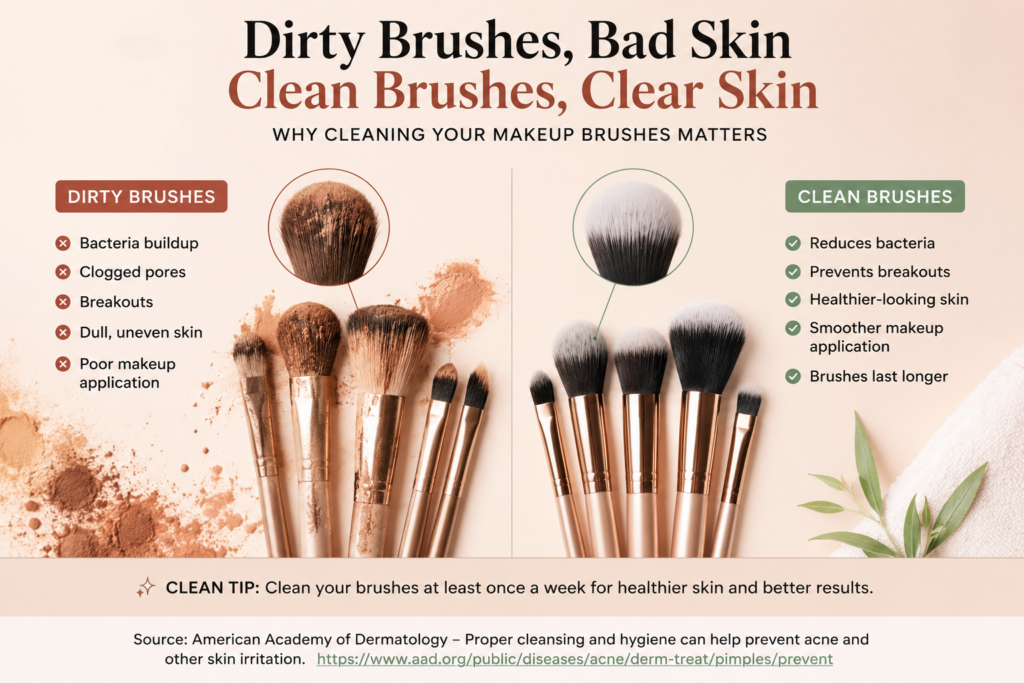
According to the American Academy of Dermatology, clean makeup tools can help reduce bacteria buildup and improve skin health.